爱尔兰科克大学授课教师简介
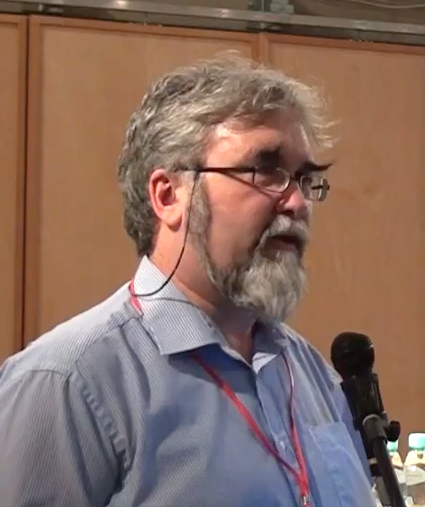
迈克·科斯格雷夫 (Michael Cosgrave) | Mike's main teaching and research interests are in personal learning and personal knowledge management in the digital age, and in games and simulations in teaching, learning and modelling complex real world problems as well as the scholarship of teaching and learning. A UCC Graduate, Mike did his Masters on the History of Beamish & Crawford and his Phd on Irish Participation in the UN Operation in the Congo. He was part of the first group of staff in UCC to complete the Cert & Diploma in Teaching and Learning in Higher Education, and has ongoing interests in the scholarship of teaching and learning, and in the use of simulations and games in teaching. Research Interests A significant portion of his research is devoted to the scholarship of teaching and learning in Digital Humanities. His recent papers are on gaming in history education, the use of asynchronous online discussion tools to support learning, and interdisciplinarity. |
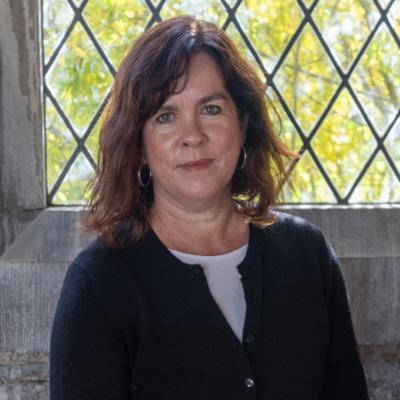
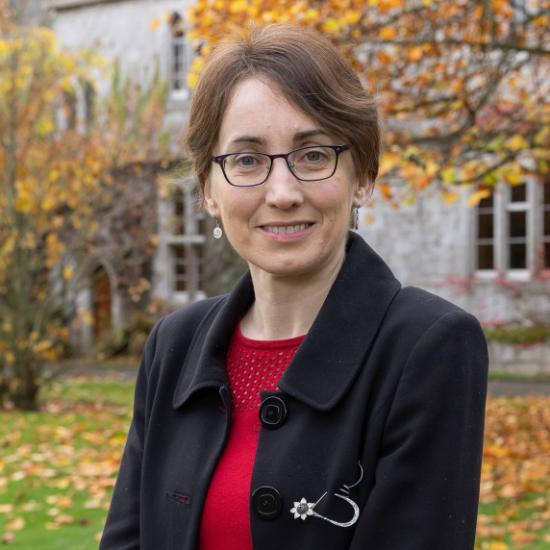
奥拉·墨菲 (Orla Murphy) | Dr Orla Murphy is Head of the School of English and Digital Humanities, University College Cork, Ireland. Her work specialises in the concept of knowledge representation, specifically 'textuality' and the impact of text technologies on the world, with a particular focus on the Digital Humanities. Her research explores the integration of emerging digital technologies (with)in the humanities in scholarship and in pedagogy. Dr Orla has co designed and developed a series of innovative degrees that promote a standards-led approach, using international best practice for digitisation, in its multiplicity of forms, in order to create (amongst other outcomes) reusable learning objects that are malleable across many platforms and of interest to a wide range of citizens. Her teaching and publications reflect corresponding interests in Old English language and culture; insular art and culture; movement of ideas from the Mediterranean world in the early medieval period; epigraphy; palaeography; codicology; textual scholarship. Research Interests Digital Arts and Humanities Digital Pedagogy Digital Education |
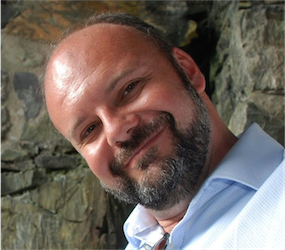
肖恩·戴 (Shawn Day) | Dr Shawn Day stands at the crossroads of academia and innovation, distinguished as an entrepreneur, digital historian, and economist. Born and raised in Canada, he is currently Head of Department and Lecturer in Digital Humanities at University College Cork, Ireland, where he also collaborates in research with the Department of Geography. His role at UCC highlights his commitment to interdisciplinary scholarship and academic excellence. Dr Day's academic career includes significant contributions to several Irish institutions including Queen's University Belfast, University College Dublin, Maynooth University, and Trinity College Dublin. His expertise primarily lies in Digital, Spatial and Medical Humanities, as well as Social Computing, where he has been instrumental in advancing Irish scholarship. His personal research explores the Socio-Cultural Terroir of Irish Craft, a study that blends cultural studies with economic and historical geography. |
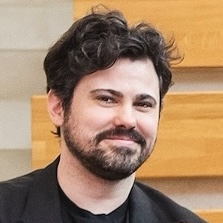
詹姆斯·奥沙利文 (James O'Sullivan) | Prof. James O’Sullivan conducts empirical research on literature and culture, reads digital fiction and literary games, and explores the changing nature of culture and cultural production in the digital age. He is Professor of Digital Culture & Cultural Analytics at University College Cork. Prof. O’Sullivan is a graduate of University College Cork, University College Dublin, and Cork Institute of Technology. Prior to joining UCC, he held faculty positions at the University of Sheffield and Pennsylvania State University. He has also taught in adjunct capacities at Cork Institute of Technology and Washington State University Vancouver and has held visiting fellowships at NOVA University Lisbon and Trinity College Dublin. |
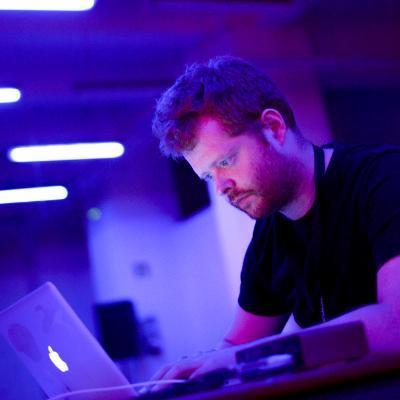
斯蒂芬·罗迪 (Stephen Roddy) | Dr. Stephen Roddy is a critical sound and music computing researcher developing auditory interfaces for complex data. His work combines media engineering methods with experimental music practices to explore how sound can make opaque data infrastructures perceptible, analysable, and reconfigurable. He is currently focused on sonification for the Internet of Sounds (IoS) and viral intelligence as a post-neural paradigm for generative artificial intelligence. Stephen approaches this work through the lens of critical technical practice with a theoretical grounding in cybernetics, human-computer interaction, and embodied cognitive science. He holds a PhD in Engineering from Trinity College Dublin and he is a member of the Radical Humanities Laboratory at University College Cork, where he lectures in the Department of Digital Humanities. |
玛琳·麦卡伦 (Máirín MacCarron) | Máirín MacCarron was appointed to the Department of Digital Humanities at UCC in 2019. Prior to this role, she held posts in the Departments of History at the University of Galway and the University of Sheffield.Elected a Fellow of the Royal Historical Society in 2020, her research has been celebrated in the Science magazine Wired ('Scientists reveal ancient social networks using AI and X-rays' by Sophia Chen, 21 March 2019) and reviewed in The New York Review of Books ('Wimple Networks' by Marina Warner, 23 June 2022).Awarded prizes include: the Dr Garret FitzGerald Postdoctoral Fellowship in the Humanities, which she received in 2012 and held at the University of Galway; and the Irish Historical Research Prize 2021 for her book Bede and Time: computus, theology and history in the early medieval world (Routledge: London and New York, 2020). |
马尤米・(梅)・利瓦纳格 (MAYUMI (MAY) LIWANAG) | MAYUMI (MAY) LIWANAG • Excellent critical and analytical skills • Expertise in material development and syllabus design • Top Master's Student (MA TESOL) University College Cork, Language Centre, O’Rahilly Building (February 2022 – Present) Position: General English and English for Academic Purposes Language Teacher • Facilitating small-group activities emphasizing English language acquisition for work and life at various levels ranging from A2 to C1 and Academic. • Grading and assessing skills in EAP Credit Module courses for students in undergraduate programs. • Co-ordinator and lead instructor for Pre-Sessional Academic Programmes (Summer) • Developing materials and curriculum for part-time evening Business Studies. • Administering and implementing online materials for short course focusing on Academic Reading and Writing Skills. • Establishing positive relationships with students to create a welcoming and positive educational environment. • Ensuring completion of administrative duties in a timely manner including student attendance and records. |
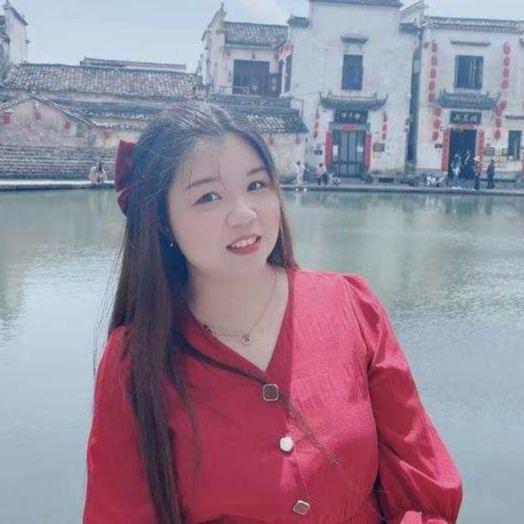
肖爽 XIAO Shuang | Dr. Shuang Xiao is a Lecturer in Digital Humanities at University College Cork. She holds a PhD in Digital Humanities from UCC and previously worked as a Postdoctoral Researcher at Tsinghua University. Her research focuses on the intersections of digital humanities, artificial intelligence, digital art history, and digital pedagogy. She applies machine learning and computer vision methods to the study of cultural and visual materials, while critically examining the interpretative, epistemological and ethical implications of artificial intelligence in humanities research. She teaches Digital Humanities at undergraduate and postgraduate levels, including on the joint BA in Digital Culture and Society delivered by UCC and the Communication University of China. Her teaching and research interests also include programming for the humanities, data analysis and visualisation, and multilingual and cross-cultural digital humanities. |